

Electronics engineers have always faced the challenge of protecting circuit boards from the environments in which they operate. But over the past decade, that challenge has grown considerably more complex — driven by fundamental shifts in PCB design, component miniaturization, and the expanding range of applications into which electronics are deployed.
Modern PCBs are denser than ever. Component pitch has decreased, board layers have multiplied, and the introduction of increasingly sensitive surface-mounted devices (SMDs) has left less physical margin for error. At the same time, the environments in which these assemblies operate have become more demanding: higher operating temperatures, greater exposure to moisture and condensation, increased vibration, and more aggressive chemical environments are now standard conditions in many industries.
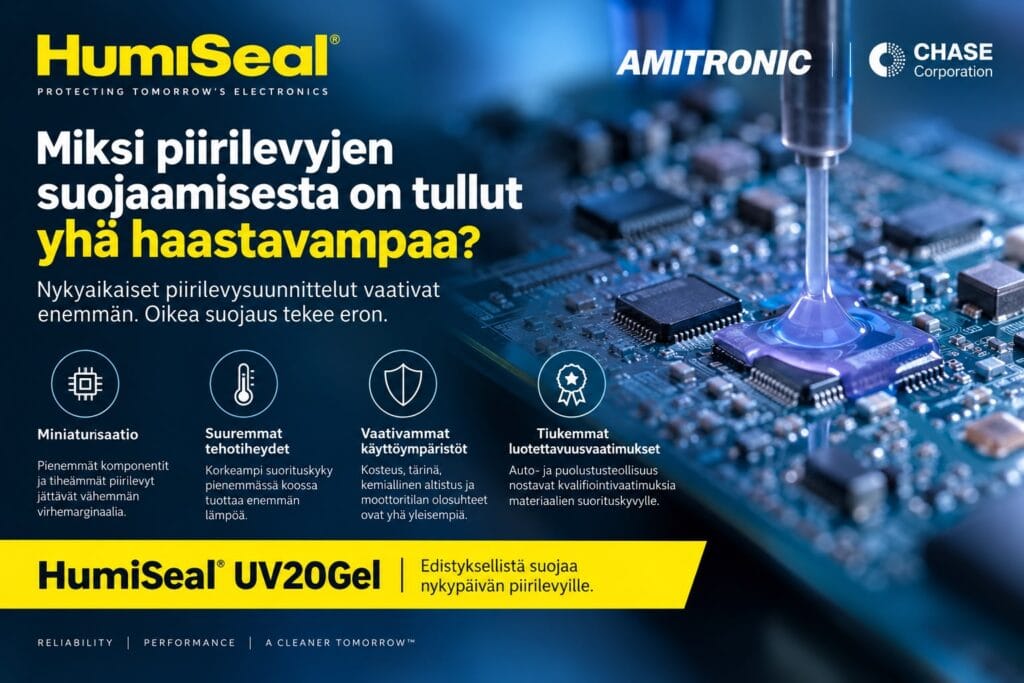
Several converging trends are intensifying the protection challenge:
- Miniaturization: As components shrink and PCB real estate tightens, the risk of contamination-induced failures — including electrochemical migration and dendritic growth — increases proportionally.
- Higher power densities: Greater electrical performance in smaller form factors generates more heat, which accelerates degradation of unprotected assemblies.
- Expanded deployment environments: Electronics are increasingly deployed in automotive underhoods, outdoor industrial enclosures, and marine environments — each presenting distinct and aggressive exposure conditions.
- Tighter reliability requirements: End-use industries, particularly automotive and defense, have imposed more rigorous qualification standards, raising the bar for protective material performance.
Traditional protection approaches — including solvent-based conformal coatings and standard silicone resins — were developed for a generation of PCB designs that no longer reflect current manufacturing reality. They struggle to keep pace with the combination of geometric complexity, thermal demands, and mechanical stress that characterizes today’s assemblies.
Advanced materials, such as HumiSeal® UV20Gel, have been engineered specifically to address these modern challenges. Understanding the evolving protection landscape is the essential first step in selecting the right solution.
Contact Amitronic to discuss how UV20Gel can be qualified for your specific PCB designs and operating conditions.